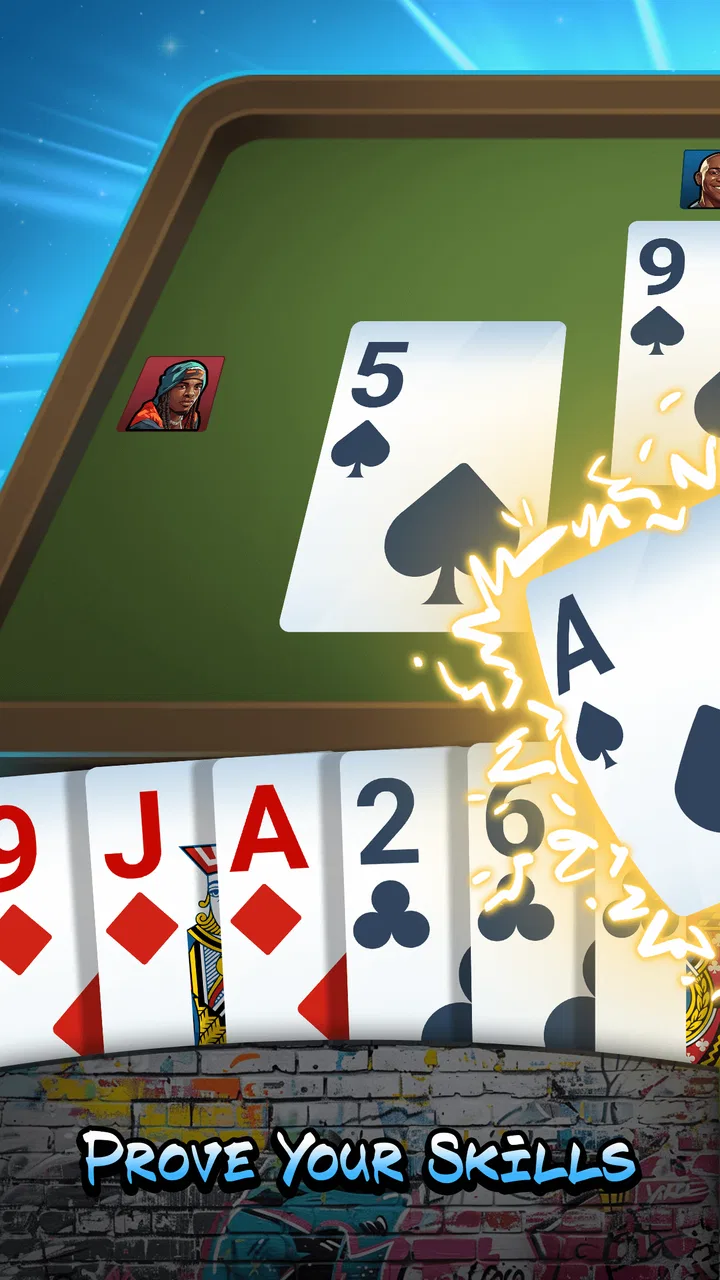
Spades Fever: Card Plus Royale
- 4.5
- Rating
- 1.00M
- Installs
- Free
- Price

 Analysis by App-foxy
I approached Spades Fever: Card Plus Royale as someone who enjoys card games but does not want to spend an evening learning a complicated interface. My first impression was that it is built around a familiar idea: play Spades, make careful bids, and try to read the table better than the other side. That makes it easy to understand at a basic level, while the decisions become more interesting once I stopped treating every hand as a race for tricks.
This is a free card game from WildCard Games, aimed at Everyone, and it is available for devices running Android 8.0 or later. The game has reached over a million installs and holds a 4.5 average from about 9,200 ratings, which fits my experience: it is approachable enough for casual players, but it still gives experienced Spades players room to think about risk, timing, and partnership play.
What to expect when you begin
The most useful way to understand this game is not as a passive card pastime, but as a short series of decisions. You are constantly weighing what your hand can probably win against what you hope it can win. A strong-looking hand can become awkward if the important suits are badly distributed, while a modest hand may work if you bid carefully and use your high cards at the right moment.
You May Also Like

 Blood Strike: 2.5 Anniversary
Blood Strike’s Loadouts Turn Every Drop Into a Tactical Gamble
A close look at Blood Strike’s custom loadouts: how fast access to signature weapons reshapes its battle royale rhythm, rewards preparation, and narrows the gap between fights.

 Pandora - Music & Podcasts
Pandora’s Music Is Easy to Start, but Harder to Recover
Pandora’s strength is its low-effort path from a seed to a station. Its weak spot is how much confidence it asks you to place in connection, setup, and quiet recovery.

 8 Ball Pool
 Is Built on Rivalries, Rematches, and Routine
A close look at the rivalries, rematches, shared routines, and unanswered safety questions that turn a quick pool match into a persistent mobile community.

 Samsung Music
’s Quiet Strength Is Playing What You Already Own
Its reach comes less from spectacle than from dependable access to a personal library. That simplicity is both the app’s strongest retention engine and its ceiling.

 AccuWeather: Weather Radar
AccuWeather Review: A Quick, Clear Forecast for Everyday Decisions
For everyday plans, the best forecast is the one you can understand quickly. AccuWeather makes rain timing, radar, and local conditions easy to act on, with a few trade-offs.

 Hill Climb Racing
Why Hill Climb Racing Still Turns Crashes Into One More Run
A tiny car, a bumpy hill and one more upgrade: Hill Climb Racing keeps resurfacing because its simple chaos makes every near-miss feel personal.
More From Our News Desk



That distinction matters for a first-time player. The goal is not simply to collect as many tricks as possible. Your bid creates a target, and falling short can be just as damaging as taking too many tricks in some situations. I found that the game becomes more satisfying when I treated the opening bid as a promise I needed to manage, rather than a guess I could forget after the first card.
The presentation is best suited to people who want a focused card session rather than a large collection of unrelated activities. Its store short description calls it “Spades Fever,” and that is a fair indication of the central experience. If you already know the basic rules, you can concentrate on the cards quickly. If you are new, the familiar trick-taking structure gives you a clear framework to learn inside.
There is also a useful difference between playing for a quick distraction and playing to improve. In a short session, I can make a bid, watch how the suits develop, and finish with a better sense of what I misread. In a longer session, I start noticing patterns in my own habits: bidding too aggressively with attractive high cards, wasting a trump card early, or assuming my partner can cover a suit without enough evidence.
The game is free to download, with optional in-app purchases priced from $5.99 to $7.99 per item. That is worth keeping in mind before starting, especially if you prefer games with no purchase prompts at all. The free entry makes it easy to test the core card experience first, but anyone sensitive to optional spending should decide in advance whether they want to ignore those offers.
Who will feel at home here
I would recommend it to a player who likes traditional card games, wants something more thoughtful than a matching puzzle, and enjoys improving through repeated hands. It also suits someone who has played Spades with friends or family and wants a convenient solo option when a table is not available.
It is less suitable if you want a fast action game, a deep story, or constant novelty from one session to the next. The pleasure comes from decisions within the same ruleset, not from unlocking a new type of game every few minutes. Players who dislike losing because of a poor bid, an unlucky deal, or a partner decision may also find the experience frustrating until they accept that not every hand is recoverable.
From installation to your first meaningful win
I’d make the first session about understanding the rhythm of a hand, not chasing a dramatic score. A careful bid gives you a useful benchmark, and watching how the suits unfold helps turn the result into a lesson you can carry into the next deal. Once that feels comfortable, the next step is sorting genuine card signals from assumptions about what your partner or opponents might hold.
Start by learning the table, not by chasing a score
After installing the game, I suggest taking the first hand slowly. Before thinking about winning, identify the suits in your hand, count the cards that look dependable, and notice how Spades function as the trump suit. That simple pause prevents the most common beginner mistake: bidding based on excitement rather than on a realistic estimate.
For a new player, a dependable card is not always the highest card. A high card in a crowded suit may be vulnerable if another player has a stronger card, while a short suit can become valuable later when Spades are allowed to cut in. I found it helpful to separate “cards I expect to win” from “cards I hope might win.” The first group should influence the bid much more strongly than the second.
Once the bid is made, watch the opening plays carefully. The first few tricks reveal information about which suits other players may be holding and whether your original expectation still makes sense. You cannot rewrite the bid, but you can change the way you spend your strongest cards. That is where the game moves from simple rule-following into actual card reading.
The first successful action is a controlled bid
For me, the first meaningful success was not merely taking a trick. It was making a modest bid, reaching it without using my best resources too early, and finishing the hand with a clear reason for each major play. That is the moment when the game starts teaching you rather than simply dealing cards.
A practical beginner routine is to make conservative bids during the first few hands. Count likely winners, be cautious with uncertain cards, and avoid adding imaginary tricks because you have several cards in one suit. Then compare your estimate with what actually happened. If you missed, ask whether the problem was the bid or the play. That distinction is more useful than simply labeling the hand lucky or unlucky.
One small technique helped me immediately: keep track of the suits that have already been played before spending a valuable Spade. If a suit is becoming scarce in your hand, you may gain an opportunity to trump a later trick. Using a Spade simply because it can win right now may remove your best answer for a more important trick later.
Another useful habit is to treat your partner’s play as information. If your partner wins a trick with a high card, that may tell you something about the remaining strength of that suit. If your partner avoids a suit or plays a low card when a higher one was possible, do not automatically assume it was a mistake. It may be a signal about what they do not want led again, or it may reflect the need to preserve a card for the bid.
A realistic everyday session
Imagine that you have ten minutes while waiting for an appointment. You open the game, play a hand, and make a cautious bid because your hand contains a couple of likely winners but several uncertain cards. Early in the hand, you resist using a Spade to take a minor trick. Later, another suit is exhausted, you can cut a dangerous card, and that decision helps you reach the target without overcommitting.
That kind of session is where I think the game works best. It gives you a complete decision cycle in a manageable amount of time: inspect the hand, set a target, react to the table, and review the result. You do not need a special occasion or a group of friends ready at the same moment. At the same time, the game rewards giving it enough attention to remember what has already been played.
If you only have a minute or two, the experience may feel less satisfying because the interesting part is not the initial deal alone. The value comes from following the hand through its changing possibilities. I would rather play one attentive hand than several distracted ones, especially when I am trying to improve.
Confusion that can slow down new players
The biggest source of confusion is usually the difference between taking tricks and fulfilling the bid. A player may feel successful after winning several rounds, then discover that the hand still went badly because the overall target was not managed properly. I recommend checking the bid before each important play and asking whether the card helps the team reach the target or merely wins something that was not necessary.
It is also easy to misunderstand the value of Spades. They are powerful, but they are not automatically the right answer. A Spade can rescue a trick, yet using one too soon can leave you without control when the table becomes more dangerous. I began to think of Spades as limited tools rather than guaranteed points, which made my decisions more deliberate.
New players may also expect every hand to be solved by the strongest visible card. That approach is unreliable. A card’s value depends on what has already been played, which suits remain, and what your partner appears to need. Sometimes the correct play is to lose a trick deliberately so that you keep control of the next one. That feels counterintuitive at first, but it is one of the clearest signs that you are beginning to understand the game.
Another point worth remembering is that a disappointing result does not always mean the game behaved unfairly. Card games naturally include hands where the starting position is uncomfortable. The useful question is whether your choices gave the hand its best chance. If you can explain why you bid and why you played a particular card, even a loss can improve your next round.
How it compares with familiar alternatives
Compared with a physical Spades game, this version is more convenient because you can start without finding three other people, preparing a deck, or agreeing on a table. That convenience comes at the cost of some social warmth. A real table gives you conversation, visible reactions, and the pleasure of reading people as well as cards. I would choose the physical version for a group gathering, but this game for private practice or a quick solo break.
Compared with simpler casual card apps, it asks more from you. You cannot rely only on rapid taps or obvious matches; the important choices are about probability, memory, and restraint. That makes it more rewarding for someone who wants a game with a learning curve, but less immediately relaxing for a player who wants effortless progress.
It also differs from broad card collections that offer many unrelated games. The focused design is an advantage if Spades is what you came to play. If you want solitaire, rummy, or several different formats in one download, a larger card collection may be a better fit. Here, the appeal depends on whether repeated Spades hands sound like depth or repetition to you.
Small strategies that make a noticeable difference
My first advanced tip is to separate the opening plan from the recovery plan. Before the first trick, decide which cards you expect to use for your bid. Once the table changes that expectation, do not stubbornly follow the original plan. If an opponent reveals strength in a suit you counted on, preserve alternatives rather than spending everything to protect one predicted trick.
My second tip is to watch for the moment when a suit stops being safe to lead. A suit that looked harmless at the beginning can become dangerous after several high cards disappear. Keeping a mental record of those changes is more valuable than memorizing every card perfectly. Even a rough sense of which suits are depleted can improve the timing of your Spades.
My third tip is to review the hand by decision, not by outcome. If a cautious bid succeeded because the deal was unusually kind, that does not automatically make it a good model for the next hand. Likewise, an aggressive bid that failed may still have been reasonable if the hand genuinely supported it. This approach keeps you from learning the wrong lesson from a single result.
A fourth trade-off concerns speed. Playing quickly can make the game feel smooth, but it also encourages automatic decisions. I found that slowing down only at key moments works better than analyzing every card equally. Pause before the bid, before using a Spade, and before taking a trick that might create unnecessary risk. Those three pauses preserve most of the strategic benefit without making the session feel heavy.
What to expect as you continue
As you become more comfortable, the next step is not simply to raise your bids. It is to become more consistent. Try to recognize which hands are genuinely strong, which are fragile, and which require cooperation from your partner. You will also start noticing that the best play can change depending on the current target. A card that is valuable when you need one more trick may be wasteful when you are already close to taking too many.
The current version is 1.22.0, and the game supports Android 8.0 and newer. For iPhone and iPad users, availability should be checked through the relevant app marketplace before downloading. In practical terms, the important point for a new player is to make sure the device meets the platform requirement and to remember that the game is free to begin, while optional purchases are present.
WildCard Games has made a focused card experience rather than an elaborate simulation of a social club. I appreciate that clarity. The game gives me enough structure to practice real Spades habits, but it does not pretend that every hand will be equally exciting. Some rounds are memorable because of a clever recovery; others mainly reinforce that a poor bid can shape the entire hand.
That limitation is part of the honest assessment. If you need constant rewards, dramatic presentation, or a wide variety of modes, this may feel narrow. If you enjoy examining a hand and gradually reducing your mistakes, the narrow focus becomes a strength. The experience is most rewarding when you accept that the fun is in making better decisions, not in being guaranteed a win.
After spending time with it, I would suggest starting with short, attentive sessions and resisting the urge to judge the game from one unlucky hand. Learn to count likely winners, protect your Spades, and use the table’s early plays as evidence. The first real milestone is not winning quickly; it is knowing why your bid worked.
For a free, approachable entry into digital Spades, I think this is a worthwhile choice. It is especially good for beginners who want a clear path from the first deal to a more thoughtful style of play, and for experienced players who need a convenient way to keep their instincts sharp. I would skip it only if you are looking for a social multiplayer atmosphere, a broad collection of card games, or a completely pressure-free pastime.
My final recommendation is simple: give it a few focused hands, keep your early bids realistic, and treat every played card as information. If that kind of quiet strategy appeals to you, Spades Fever: Card Plus Royale has enough substance to become a regular card-game companion rather than a one-time download.
FAQs for Spades Fever: Card Plus Royale
01What is Spades Fever: Card Plus Royale?
Spades Fever: Card Plus Royale is a captivating card game app designed for both Android and iOS platforms. It combines the classic game of Spades with innovative features and online multiplayer options, allowing players to enjoy a modern twist on the traditional card game experience. With customizable themes and intuitive controls, it offers a seamless gaming experience for both beginners and seasoned players.
02Is Spades Fever: Card Plus Royale free to download and play?
Yes, Spades Fever: Card Plus Royale is free to download and play. However, it includes optional in-app purchases that enhance gameplay, such as premium themes, card backs, and ad-free experiences. While not necessary to enjoy the game, these purchases can enhance your enjoyment and provide a more personalized experience.
03Does Spades Fever: Card Plus Royale require an internet connection?
Spades Fever: Card Plus Royale offers both online and offline modes. While an internet connection is required to access multiplayer features and compete with players worldwide, the game also includes offline modes. This allows users to play against AI opponents, making it a versatile option for various gaming environments.
04How does Spades Fever: Card Plus Royale handle player privacy and data security?
Spades Fever: Card Plus Royale prioritizes user privacy and data security by adhering to strict data protection policies. The app only collects necessary data for gameplay and performance improvements. Players can adjust privacy settings and review the app’s privacy policy to understand data handling practices fully, ensuring a secure gaming experience.
05What makes Spades Fever: Card Plus Royale different from other card games?
Spades Fever: Card Plus Royale stands out with its unique blend of traditional Spades gameplay and modern features, such as customizable themes and online multiplayer options. Its intuitive interface, engaging graphics, and regular updates keep the game fresh and exciting. Additionally, it supports cross-platform play, allowing friends on different devices to connect and enjoy the game together.
Pros
- Smooth and intuitive user interface.
- Engaging multiplayer mode available.
- Daily rewards keep players motivated.
- Customizable avatars for personalization.
- Quick matchmaking with minimal wait time.
Cons
- Contains occasional in-app ads.
- Limited offline gameplay options.
- Requires stable internet connection.
- Some features locked behind paywall.
- Occasional lag in high-traffic times.

Spades Fever: Card Plus Royale
Gallery